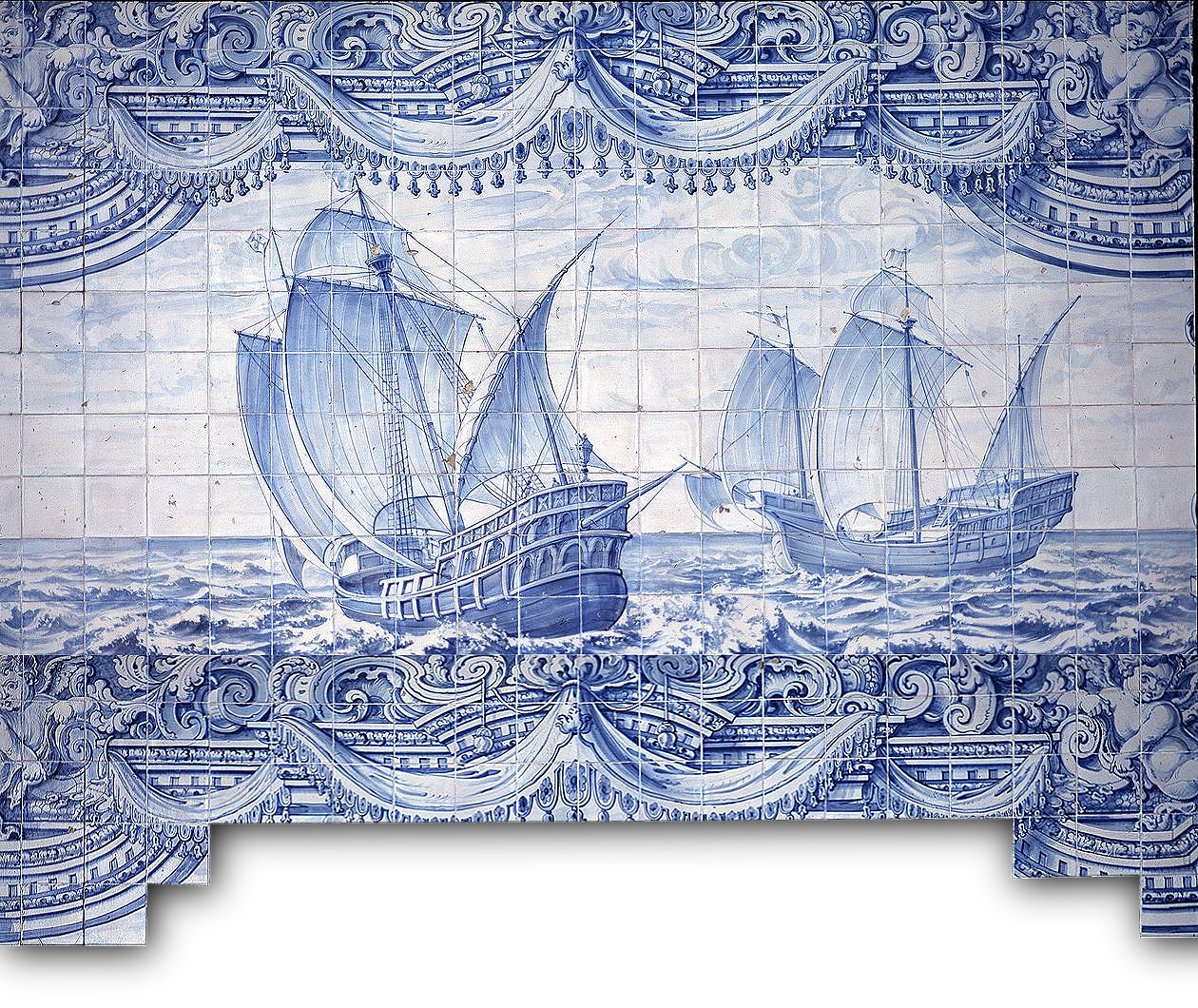
Azulejos, from the Arabic "al zuleiq" meaning "small polished stone," are a key feature of Portuguese art and architecture. Introduced by the Moors in the 8th century, they became prominent in Portugal in the 15th century. Initially imitating Byzantine and Roman mosaics, they evolved with Italian and Flemish influences into intricate geometric and figurative designs.
In Madeira, azulejos shape cultural and architectural aesthetics, depicting religious scenes, history, and daily life. Their widespread use symbolizes Portugal’s artistic traditions and identity.
Today, they adorn public buildings, banks, homes, hotels, and car showrooms in Madeira. Notable examples include the entrance of Mercado dos Lavradores in Funchal.
Another unique example is the set of tile panels that adorn Café Ritz, one of the oldest grand cafés in Funchal. These depict picturesque views of Madeira, largely inspired by late 19th-century ethnographic photography and postal art.
Created by Madeiran painter Gabriel Constante (1876–1950) and produced at the Constância Factory in Lisbon in 1932, the panels helped shape the island’s image as an ideal destination for the growing tourism industry—particularly health tourism—and remain a cultural icon of the city today.
Azulejos
Portuguese: [ɐzuˈle(j)ʒu, ɐzuˈlɐjʒu]
Portuguese painted tin-glazed ceramic tilework.
Complete the puzzle and make the wall beautiful again.
The image above (originally from a postcard circa 1900) is one of the few remaining public depictions of Madeira’s first and only railway (1893-1943)—a British project that connected downtown Funchal to the hillside retreat of Monte, known for its quintas, sanatoriums, and the iconic Monte wicker toboggans, still in use today and prominently depicted in the foreground.